


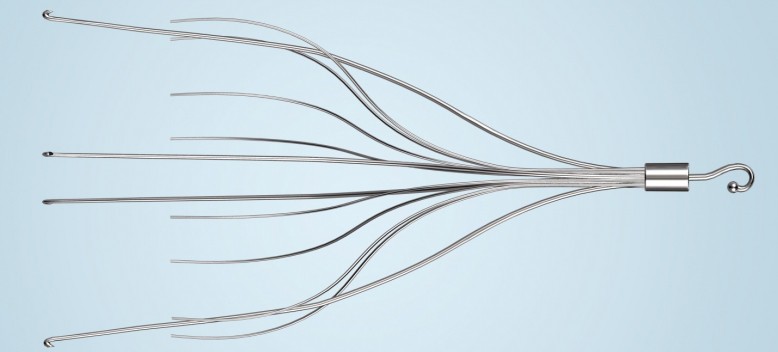
In spite of an FDA warning and the absence of demonstrable benefits, IVC filters are still being implanted at higher rates in the US than in European countries, according to a recent study in JAMA Internal Medicine.
“In the United States, the IVC filter implantation rates are 25 fold higher than in Europe,” research leader Dr. Riyaz Bashir said in a statement. “The hospitals across this country collectively are spending close to a billion dollars on these devices every year without a known significant benefit,” Bashir added. “With current level of evidence we believe that the appropriate implantation rate in the U.S. should be similar to, or lower than, the rate observed in Europe.”
The filters are made to catch blood clots that lead to pulmonary emboli and in patients who’ve found traditional blood thinning medicines ineffective.
In 2010, the FDA issued a warning concerning the IVC filters noting that they can break and cause serious health problems. Since the time of that warning, use of the filters is down but still outpaces use in European countries.
“The significant decrease in IVC filter implantations after the FDA communication reflects that such communications are a very powerful means of affecting contemporary practice patterns around the country,” said Bashir.
In 2014, the FDA updated the warning, saying IVC filters should be removed within two months of implantation. More specifically, the FDA’s recommendation is IVC removal between the 29th and 54th days following implantation in patients after the risk of pulmonary embolism has subsided.
“Despite the FDA warning, most retrievable filters are never retrieved,” Dr. Rita F. Redberg of the University of California, San Francisco wrote in a related article in JAMA Internal Medicine. “In addition, evidence suggests that the longer the filter is in place the higher the chance of fracture.”
In her article, Redberg, a cardiologist who specializes in heart disease in women, called for a moratorium on IVC filter implantations “unless or until there are data showing efficacy greater than risk.”
This study also revealed that implants were placed in patients who are able to take blood thinning drugs. So, why are these IVC implants being used at such a high rate? Perhaps the successful marketing campaigns have something to do with this. These filters were aggressively marketed and sold through carefully planned, multifaceted marketing campaigns and strategies, offering misleading expectations with respect to both the utility and safety of retrievable IVC Filters. Once again, we see profits prioritized over safety and efficacy.