


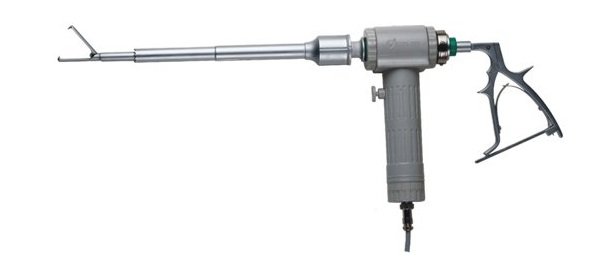
 Amy J. Reed, MD, has died, 4 years after her surgery that used a power morcellator to remove her uterus. Dr. Reed’s surgery was performed at Brigham and Women’s Hospital in Boston where she and her husband held teaching positions. A biopsy post surgery was the first diagnosis of Reed’s cancer—the morcellator had sprayed her malignant cells around her abdomen. Despite aggressive chemotherapy, radiation therapy, and immunotherapy, she suffered multiple recurrences in her abdomen, lungs, and spine. After the biopsy revealed cancer, Reed became an advocate for other patients who didn’t know about the morcellator’s dangers. She contacted regulatory officials, device makers, and spread the word to anyone who would listen.
What Are Power Morcellators?
Power morcellators are surgical devices designed to cut or sever large masses of tissue so that they can be more easily removed from the internal surgical site. These can include certain procedures to treat uterine fibroids, such as removing the uterus (hysterectomy) or removing the uterine fibroids (myomectomy). Morcellation refers to the division of tissue into smaller pieces or fragments and is often used during laparoscopic surgeries to facilitate the removal of tissue through small incision sites.
However, the morcellator devices have been found to cause serious health issues in women who’ve had the devices used in suspected or known uterine sarcoma cases. Originally, it was believed that hidden sarcomas developing after morcellator surgery was fairly uncommon- 1 in 10,000 surgeries. After closer analysis, the number was quite different-1 in 350.
In 2014, the FDA noted, “If laparoscopic power morcellation is performed in women with unsuspected uterine sarcoma, there is a risk that the procedure will spread the cancerous tissue within the abdomen and pelvis, significantly worsening the patient’s long-term survival. While the specific estimate of this risk may not be known with certainty, the FDA believes that the risk is higher than previously understood. Because of this risk and the availability of alternative surgical options for most women, the FDA is warning against the use of laparoscopic power morcellators in the majority of women undergoing myomectomy or hysterectomy for treatment of fibroids. Limiting the patients for whom laparoscopic morcellators are indicated, the strong warning on the risk of spreading unsuspected cancer, and the recommendation that doctors share this information directly with their patients, are part of FDA guidance to manufacturers of morcellators. The guidance strongly urges these manufacturers to include this new information in their product labels.”
That’s the big deal. It’s not enough to suspend sales of a dangerous medical device, they have to be recalled. Dr. Amy Reed lost her life at a young age due to a lethal medical device.
Photo Credit by DrugDangers.com