


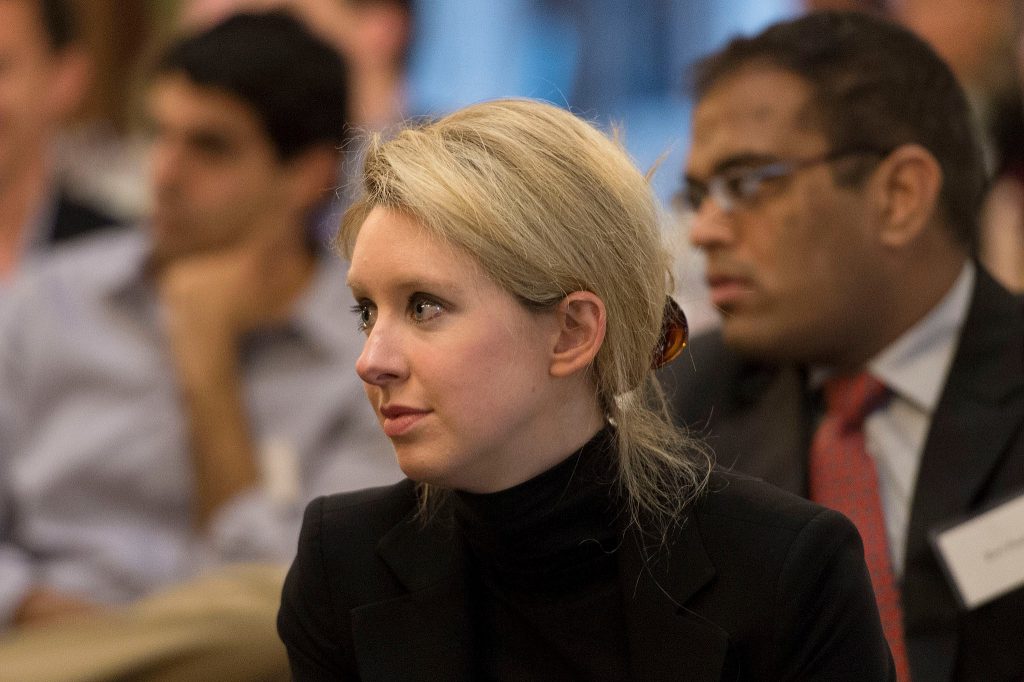
The blood-testing startup Theranos, which had promised to revolutionize blood testing, has come crashing down after being charged with “massive fraud” by the Securities & Exchange Commission. Theranos CEO and founder Elizabeth Holmes, and former president Ramesh “Sunny” Balwani were accused by the SEC of raising over $700 million for their blood-testing company between 2013 and 2015 under false pretenses. The SEC alleges that Holmes and Bulwani claimed to have developed a successful blood-testing device that could be used to conduct a range laboratory tests with just a few drops of blood, when in fact the technology they promoted never worked.
In actual fact, the desktop sized testing device never proved capable of handling all the tests Theranos had claimed it would it would. The product never worked as advertised, and according to the SEC complaint;
“as September 2013 approached — the date for the launch of the first phase of the rollout of Theranos services in Pharmacy A stores — it became clear to Holmes that the miniLab would not be ready. At the time, Theranos had not fully integrated other testing methods into the miniLab and had not completed the scientific verification steps needed to make any of its blood tests available on the miniLab for patient testing.”
Holmes had made false claims to investors including telling several that the Theranos’ analyzers had been deployed by the US Department of Defense in Afghanistan and on medevac helicopters – which wasn’t true. Theranos also entered into partnerships with Walgreens and Safeway to place their miniLabs in stores. When Holmes realized the analyzer wouldn’t be ready in time for rollout in 2013 she and Balwani asked Theranos’ engineers to modify third-party commercial analyzers to test blood taken from a finger prick. In demonstrations, Walgreens executives gave finger prick blood samples and Theranos secretly used modified third-party machines to process them instead of the miniLab.
After offering Theranos’ tests at 40 of its “Wellness Centers” in Arizona and California, Walgreens discovered the proprietary technology failed to work as had been advertised. The pharmacy giant discovered Theranos minilabs produced inaccurate results, on top of lab improprieties that regulators said could pose “immediate jeopardy” to patients. Walgreens eventually sued Theranos, claiming they had been misled and also revealed that 31,000 of its blood test results had to be voided.

Theranos, once valued at $9 billion dollars, is today worth nothing. Theranos executives Holmes and Baswani intentionally lied to and misled investors, and potentially risked the lives of patients who might have relied on Theranos diagnostic technology that never worked. For this massive fraud Theranos executives received the Silicone Valley equivalent of a slap on the wrist from the SEC, a $500,000 fine and a 10-year ban from working with the company. The fine pales in comparison to the millions they made in the past several years. But more troubling is how little attention the SEC paid in their complaint to how Theranos was willing to risk patients lives with mission-critical technology they knew would never work – all in the name of placating investors. It is more than fraud; it is human endangerment and hubris on an inconceivable level.
At Saunders & Walker, we will continue to monitor and update our clients about Theranos and other concerning developments in the medical industry.